The Challenge
What we set out to solve
- 1Manual Officer Management: Procurement postings, approvals, and administrative workflows relied heavily on paper-based processes and manual coordination.
- 2Limited Transparency in Postings: Unequal postings and lobbying practices created perceptions of bias and weakened institutional trust.
- 3Scattered Training & Certification Records: Professional development data existed across disconnected systems and physical files, making verification and compliance difficult.
- 4Slow Administrative Cycles: Officers often waited weeks for approvals, postings, or updates to career records.
- 5Lack of Performance Visibility: Evaluations were largely subjective, with limited standardized metrics for assessing procurement performance across MDAs.
The Solution
How we delivered
- 1Enhanced Officer Profiling: Biometric identity verification integrated with NIMC, credential validation, and digital career histories replaced fragmented paper-based records with verified, tamper-resistant profiles.
- 2Algorithm-Driven Postings: Automated assignment workflows introduced transparent rotation rules, conflict-of-interest checks, and auditable posting records—reducing opportunities for bias and lobbying.
- 3Professional Development Framework: Continuous Professional Development (CPD) tracking linked to SPESSE certification and LMS integrations enabled structured career growth and ongoing certification management.
- 4Performance Evaluation System: Data-driven assessments incorporating compliance monitoring, project metrics, and 360-degree feedback replaced inconsistent and subjective review processes.
- 5Real-Time Stakeholder Access: Interactive dashboards provide visibility for MDAs, oversight bodies, contractors, and civil society stakeholders, improving accountability and institutional transparency.
- 6Audit & Governance Controls: Immutable audit trails and activity monitoring ensure traceability across postings, approvals, and officer records.
The Results
What changed
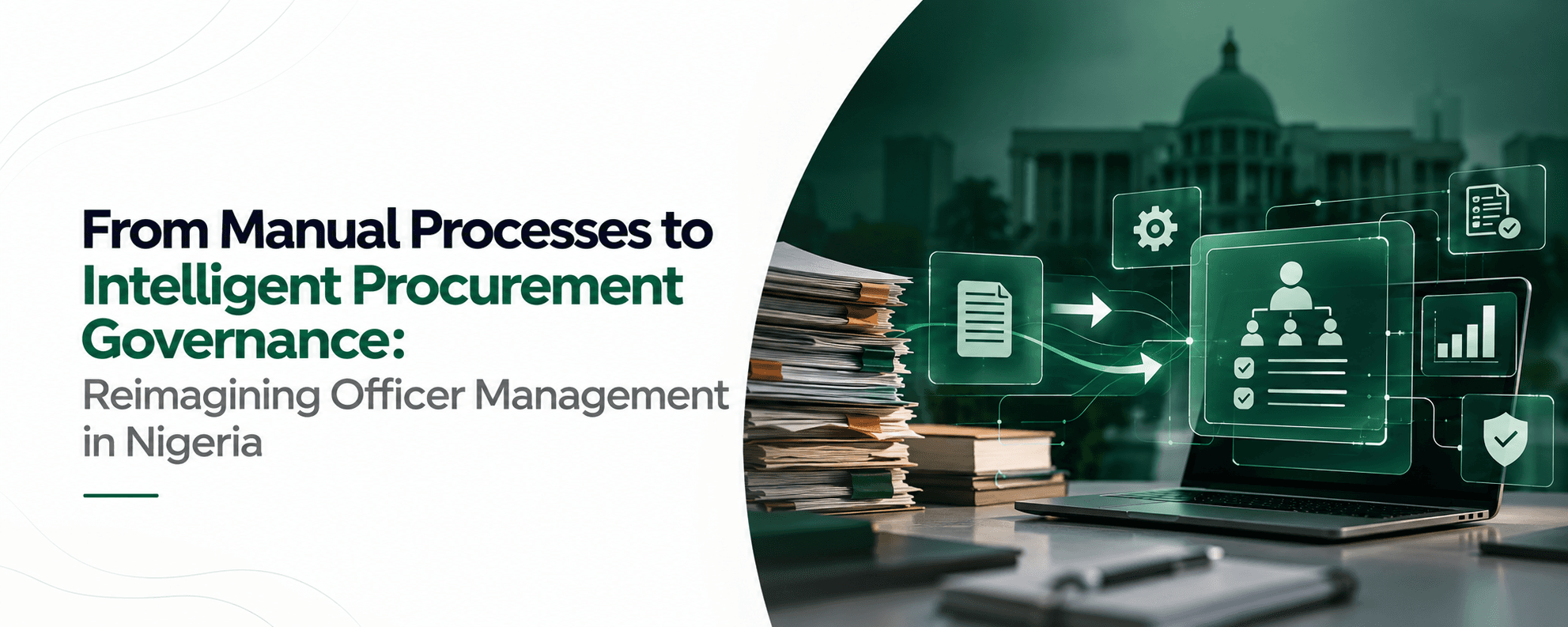
From Paper-Based to Digital: Officer records, postings, and certifications are now centralized within a structured digital platform, eliminating fragmented paper trails.
From Delayed to Streamlined Processes: Administrative workflows that previously took weeks can now be completed significantly faster through automated approvals and real-time updates.
From Subjective to Data-Driven Evaluations: Performance management now incorporates measurable indicators, compliance metrics, and structured feedback mechanisms.
From Opaque to Transparent Postings: Algorithm-driven assignments reduce bias while creating auditable, traceable decision-making processes.
From Scattered Training Records to Structured Professional Development: Officers now have visibility into certifications, training milestones, and career progression within a unified system.
From Institutional Silos to Shared Governance: Stakeholders across MDAs now operate within a common framework that improves coordination, oversight, and accountability.
Project Details
Client
Bureau of Public Procurement (BPP)
Industry
Government & Public Sector
Duration
8 Months
Service
Digital Transformation & Process Automation
Category
Government & Public Sector